The Travels of Sir John Mandeville
The Hills of Gold
A medieval traveller reaches the edge of India and hears of mountains where gold lies in abundance – but where getting to it means facing creatures that sound more like monsters than ants.
The gold-keeping pismires
On Taprobane, Mandeville tells us, there are great hills of gold guarded diligently by pismires – ants.
The creatures themselves separate the pure gold from what is worthless. They are as large as hounds, and no one dares approach the hills openly, because the pismires will attack and devour anyone who comes near. Gold can therefore be taken only by cunning.
During the hottest part of the day the pismires retreat underground. The people of the country then hurry to the hills with camels, dromedaries, horses and other beasts, load as much gold as they can, and flee before the pismires emerge again.
At cooler times they use another trick.
They take mares that have young foals and hang empty, open vessels low against the mares’ sides. The mares are sent out to graze near the golden hills while their foals are kept behind.
The pismires, unable to tolerate an empty vessel, climb into the containers and fill them with gold. When the people judge that the vessels must be full, they bring out the foals and make them call to their mothers.
Hearing them, the mares return – carrying their loads of gold.
The pismires, Mandeville explains, will allow beasts to wander among them.
Men, however, they will not tolerate at all.
Portolan reading text, lightly modernised from A. W. Pollard’s 1900 modern-spelling edition of the Cotton manuscript.
On the map
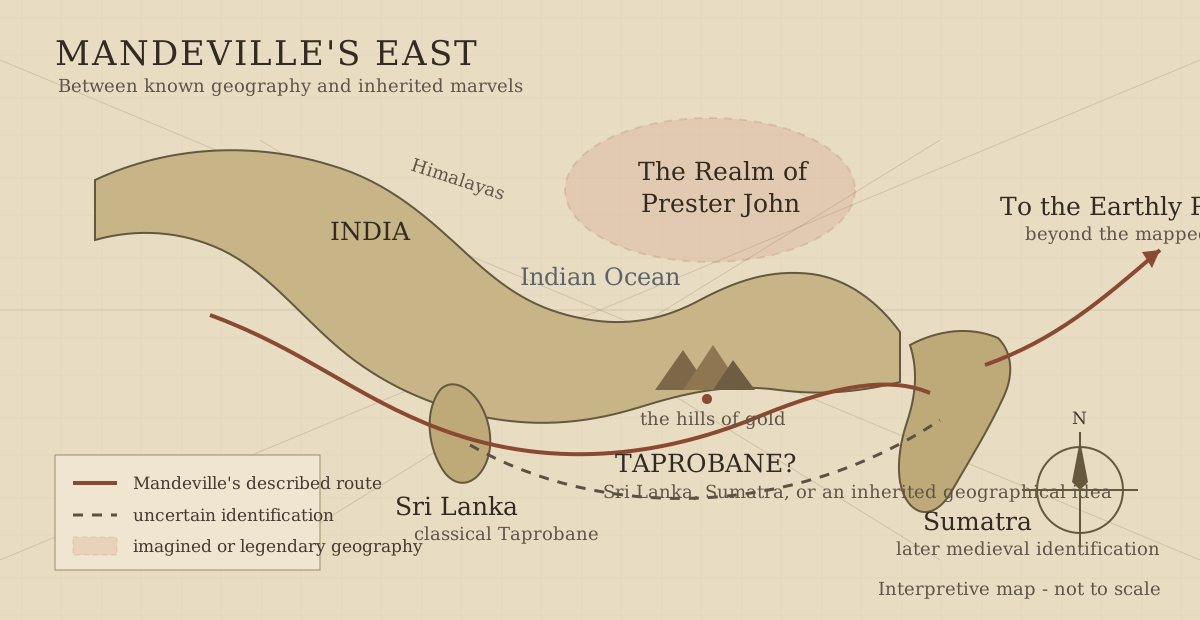
Mandeville places his hills of gold on Taprobane, an island at the far eastern edge of the world he describes.
Finding Taprobane on a modern map is less straightforward than it sounds. In classical geography the name referred to Sri Lanka, but during the later Middle Ages European travellers and mapmakers increasingly confused Taprobane with Sumatra.
What is going on here?
Mandeville’s gold-keeping pismires were already ancient by the time he wrote about them.
Nearly eighteen centuries earlier, Herodotus described enormous ants in northern India that supposedly brought gold-bearing sand to the surface. The Roman writer Pliny the Elder later repeated another version of the story.
Mandeville therefore seems to be reshaping a very old piece of geographical folklore rather than reporting something newly encountered.
One proposed explanation connects the legend with Himalayan marmots whose burrowing can expose gold-bearing soil. It is an intriguing possibility, but not an established explanation.
The story itself travelled almost as far as Mandeville claimed to have done – from ancient Greek accounts of India, through Roman natural history, into the geographical imagination of medieval Europe.
Portolan notes
Pismires – an old English word for ants.
Taprobane – a classical and medieval geographical name most commonly associated with Sri Lanka, though sometimes confused with Sumatra.
Prester John – the legendary Christian ruler whom medieval Europeans imagined as reigning somewhere far to the east.